Aluminium is quietly becoming the default choice for windows in Indian homes — particularly in luxury residences, high-rise apartments, and architecturally ambitious villas. Here's why the shift is happening, and why it's likely to accelerate.
1. Strength that lasts decades
Premium aluminium window systems are engineered to perform for 40+ years with minimal maintenance. Unlike UPVC, which can yellow and become brittle under prolonged UV exposure, aluminium retains its structural integrity and appearance across India's full climatic range — from coastal humidity to North Indian extremes. Quality systems like TOSTEM's add a patented TEXGUARD coating, which adds another layer of weather and scratch resistance, virtually eliminating maintenance for the first few decades.
2. Slim profiles, more glass, more light
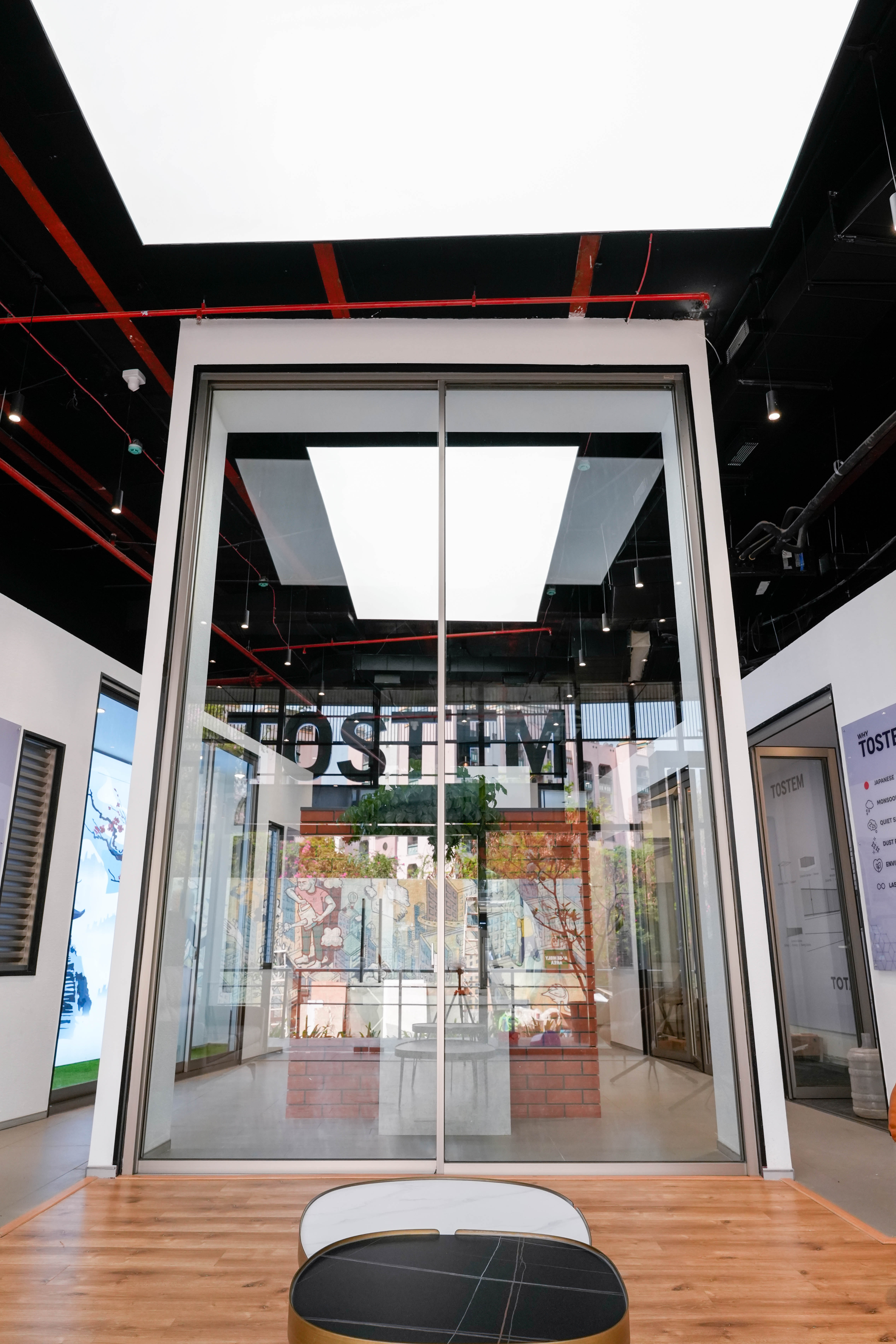
The mechanical strength of aluminium allows window frames to be remarkably slim while still spanning large openings. This is where aluminium beats UPVC decisively: the same opening that needs a chunky 80mm UPVC frame can be done with a 40mm aluminium one — giving you noticeably more glass area, brighter rooms, and uninterrupted views. For modern, minimal interiors, this matters enormously.
3. Designed for India's climate
Premium aluminium windows are tested against international standards (JIS, ASTM, BS) for wind load, water tightness, and air infiltration. That means they perform reliably in coastal zones (salt-laden air), in hilly areas (high wind loads), and in dense urban settings (noise and dust). When you specify the right configuration with proper glazing — double, low-E, or laminated — you can dramatically cut HVAC loads and noise penetration.
4. Wide design vocabulary
Sliding, casement, awning, French, tilt-and-slide, fixed, glass-to-glass corner, vertical sliding — aluminium can do every configuration architects need. Combined with a range of finishes from anodised satin and powder-coated colours to wood-grain laminates, aluminium windows can sit comfortably in a contemporary Pune villa, a Mumbai penthouse, or a traditional Goa heritage renovation.
5. Genuinely sustainable
Aluminium is one of the most recyclable materials in the building industry — over 75% of all aluminium ever produced is still in use today. Window systems can be melted down at end-of-life and reformed with only ~5% of the energy required to produce primary metal. For projects pursuing LEED, IGBC, or GRIHA certifications, aluminium windows contribute meaningfully to the recycled-content credits.
The bottom line
If you're planning a project that needs to look premium and last decades without ongoing maintenance bills, aluminium is the rational choice. Pair it with a globally trusted brand like TOSTEM and the right installer, and you're investing in a window system that adds value to the property for as long as it stands.